Semantic SEO optimizes content around entities, their attributes, and their relationships, while traditional SEO targets individual keywords through density, placement, and backlink acquisition. Google’s evolution from Hummingbird through BERT through MUM shifted ranking signals from keyword matching to semantic understanding.
Content built with entity-based optimization methodology survives algorithm updates and earns AI citations from ChatGPT, Perplexity, and Google AI Overviews. Traditional SEO still applies to technical fundamentals, but fails as a standalone content strategy in modern search.
What Is the Core Difference Between Semantic SEO and Traditional SEO?
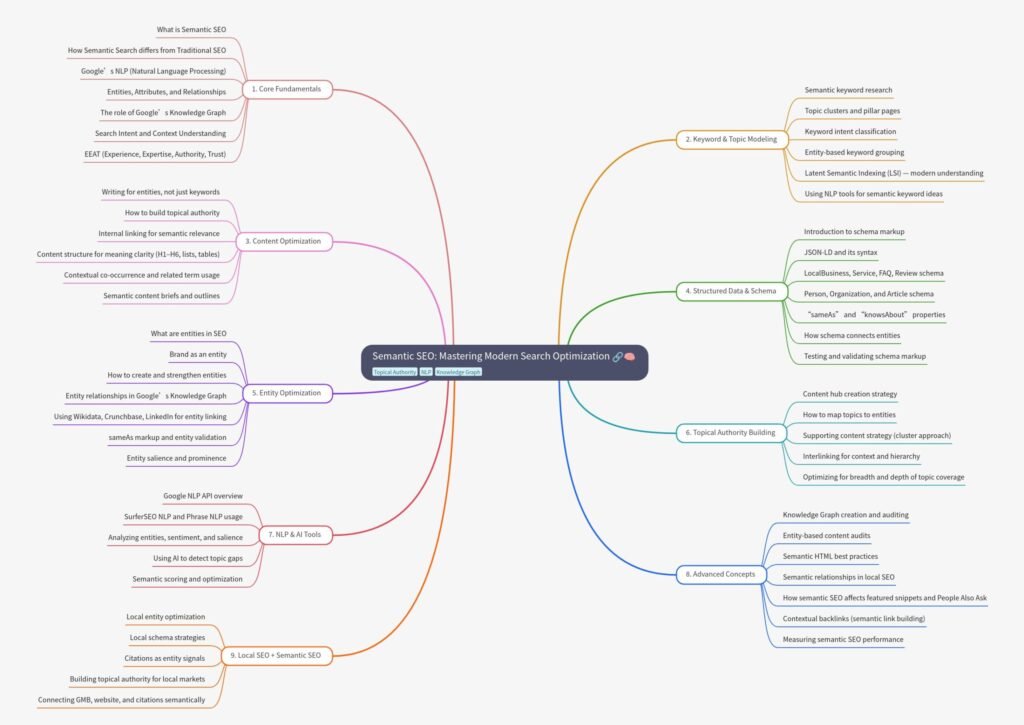
Semantic SEO optimizes content around entities, their attributes, and their relationships, while traditional SEO targets individual keywords through density, placement, and backlink acquisition.
Traditional SEO follows a predictable formula. You research a keyword. You place that keyword in your title and H1s, H2s, and body text at a calculated density. You build backlinks from other sites. You repeat this for every keyword on a new page. The entire strategy revolves around matching the exact phrase someone types into Google.
Semantic SEO works differently at every level. Instead of targeting a keyword, you identify the entity your page is about. You declare that entity with specific attributes and values that search engines can verify. You connect that entity to related entities through structured content and internal links.
A traditional page targeting “sober living San Antonio” places that exact phrase 12 to 15 times. A semantic page declares Drew’s Sober Living as the entity and attaches attributes like structured men’s recovery programs, house manager oversight, and accountability-based living in San Antonio and New Braunfels, Texas. Google understands the topic, not the keyword pattern.
I use Entity Attribute Value structures as the foundation of every semantic SEO project. The entity is the thing you write about. The attribute is a property of that entity. The value is the specific detail that makes the attribute concrete. This E-A-V structure feeds directly into how Google’s Knowledge Graph processes information.
How Content Structure Differs: Entity Declarations vs Keyword Placement

Traditional SEO creates one page per keyword, while semantic SEO builds interconnected topic clusters where each page strengthens every other page in the network.
With a traditional structure, you find 50 keywords and create 50 individual pages. Each page competes independently. This often causes keyword cannibalization, where multiple pages on your own site fight each other for the same positions.
Semantic structure takes the opposite approach. You map a central entity and identify every subtopic related to it. You create a pillar page covering the topic broadly, then build 15 to 30 supporting pages covering specific angles. Internal links connect every page. Each new page strengthens every existing page because Google sees growing topical depth.
The heading structure tells the story. A traditional H2 reads “Our Sober Living Services” because it targets a keyword. A semantic H2 reads “How Drew’s Sober Living Structures Accountability Based Recovery in San Antonio” because it declares the entity and attributes in a statement that stands alone as a complete fact. This is how AI systems extract and cite your content.
One myth needs addressing. Multiple SEO tools recommend using “LSI keywords” as part of semantic SEO. Google does NOT use Latent Semantic Indexing. Google uses NLP, Knowledge Graph, and transformer models like BERT and MUM. The accurate term is co-occurring entities or semantic keywords. Calling them LSI keywords shows a misunderstanding of how semantic content structures meaning for machines.
Why Google’s Algorithm Evolution Made This Shift Inevitable

Google’s evolution from Hummingbird in 2013 through BERT in 2019 through MUM in 2021 systematically replaced keyword matching with semantic understanding as the primary ranking mechanism.
Hummingbird (2013) started reading page context and meaning instead of matching individual keywords.
RankBrain (2015) introduced AI based ranking that interprets queries Google has never seen before. About 15% of daily searches are brand new queries that RankBrain processes through meaning.
BERT (2019) applied natural language processing to understand word relationships in both queries and content. By 2020, BERT influenced almost every English-language search result.
MUM (2021) processes information across languages and formats at 1000x the capacity of BERT.
AI Overviews (2024 onward) generate answers by extracting from semantically structured content. Pages built around keyword density rarely get selected.
Each update moved further from “does this page contain the keyword?” toward “does this page understand the topic?” I watched sites relying on keyword density lose 40 to 60% of traffic through successive core updates, while semantically structured content held position or gained.
How Authority Building Changed: Backlinks vs Topical Depth

Traditional SEO builds authority through backlink volume and domain authority, while semantic SEO builds authority through topical depth and content interconnection across a semantic content network.
Traditional authority works like voting. Each backlink counts as a vote. More votes from high authority sites mean better rankings. This still carries weight, but the balance has shifted.
Semantic authority works like a library. Google evaluates how thoroughly you cover a topic across your entire site. A website with 30 interconnected pages covering every angle of a topic demonstrates more authority than one page with 50 backlinks.
The compounding effect is the biggest practical difference. Each backlink helps one page. Each new page in a semantic content network strengthens every existing page. I build networks of 30 to 50 interconnected pages because topical authority compounds in a way individual backlinks never will. Entity based copywriting drives this compounding effect at the content level.
How Each Approach Performs in AI Search and LLM Citations

Semantic SEO content gets cited by ChatGPT, Perplexity, and Google AI Overviews because AI retrieval systems extract self-contained passages with clear entity declarations, while keyword content lacks that structural clarity.
This dimension changes the entire conversation about which approach wins in 2026. Zero comparison articles cover it.
AI citation works in two stages.
Retrieval: the AI system searches for passages matching the query. Clear entity declarations and E-A-V structures score higher.
Generation: the AI selects trustworthy and clearly structured passages for its response. Verifiable facts matching consensus across sources get cited.
Traditional keyword content fails both stages. Keyword density pages lack entity declarations, so retrieval scores them low. Vague marketing language lacks verifiable facts, so the generator skips them.
Semantic content wins both stages. Entity declarations help retrieval. E A V structures provide citable facts. Self-contained passages let AI extract without losing context. This is Generative Engine Optimization, and it is a natural consequence of doing semantic SEO correctly.
I now measure content success by AI citation frequency alongside Google rankings. When client content gets cited in ChatGPT or Perplexity responses, the semantic structure is performing.
Comparing Results: What Each Approach Delivers
Semantic SEO outperforms traditional SEO across 10 measurable dimensions.
| Dimension | Traditional SEO | Semantic SEO |
|---|---|---|
| Primary Focus | Individual keywords | Entities and relationships |
| Content Structure | One page per keyword | Topic clusters and content networks |
| Optimization Target | Keyword density and placement | Entity declarations and E A V structures |
| Authority Building | Backlink volume | Topical depth and interconnection |
| Algorithm Resilience | Vulnerable to core updates | Survives through semantic alignment |
| AI Citations | Ignored by ChatGPT/Perplexity/AI Overviews | Cited by AI retrieval systems |
| Query Coverage | Single keyword per page | Multiple queries per cluster |
| ROI Timeline | Quick gains that plateau at 3 to 6 months | Slower start but compounds over 6 to 12 months |
| Content Lifespan | Requires constant refreshing | Evergreen when entity relationships hold |
| Measurement | Keyword position tracking | Topical authority and AI visibility metrics |
This table reflects what I see across client projects in recovery services and e commerce and legal verticals. Traditional SEO delivers faster initial movement but flattens. Semantic SEO compounds and produces stronger results by month six.
When Traditional SEO Tactics Still Apply
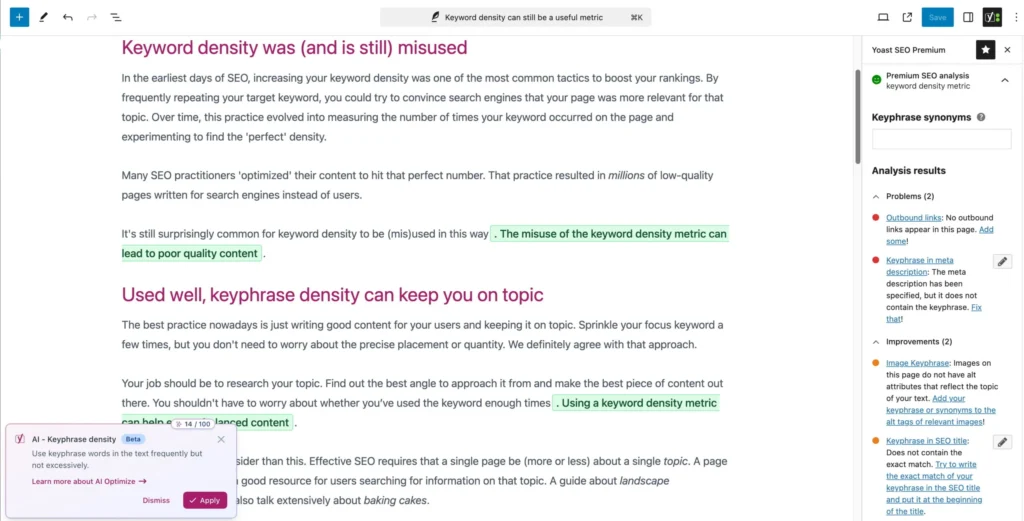
Technical SEO fundamentals from the traditional approach remain necessary regardless of content methodology.
Site speed and Core Web Vitals, mobile responsiveness, crawlability, and HTTPS still matter. These are baseline requirements, not a “traditional vs semantic” debate. Local SEO citations and NAP consistency still apply for geographic targeting. Keyword research serves as a planning tool in semantic SEO, but not as a density optimization target.
Semantic SEO replaces keyword density as a content strategy. It does not replace technical SEO foundations.
How to Transition From Traditional SEO to Semantic SEO
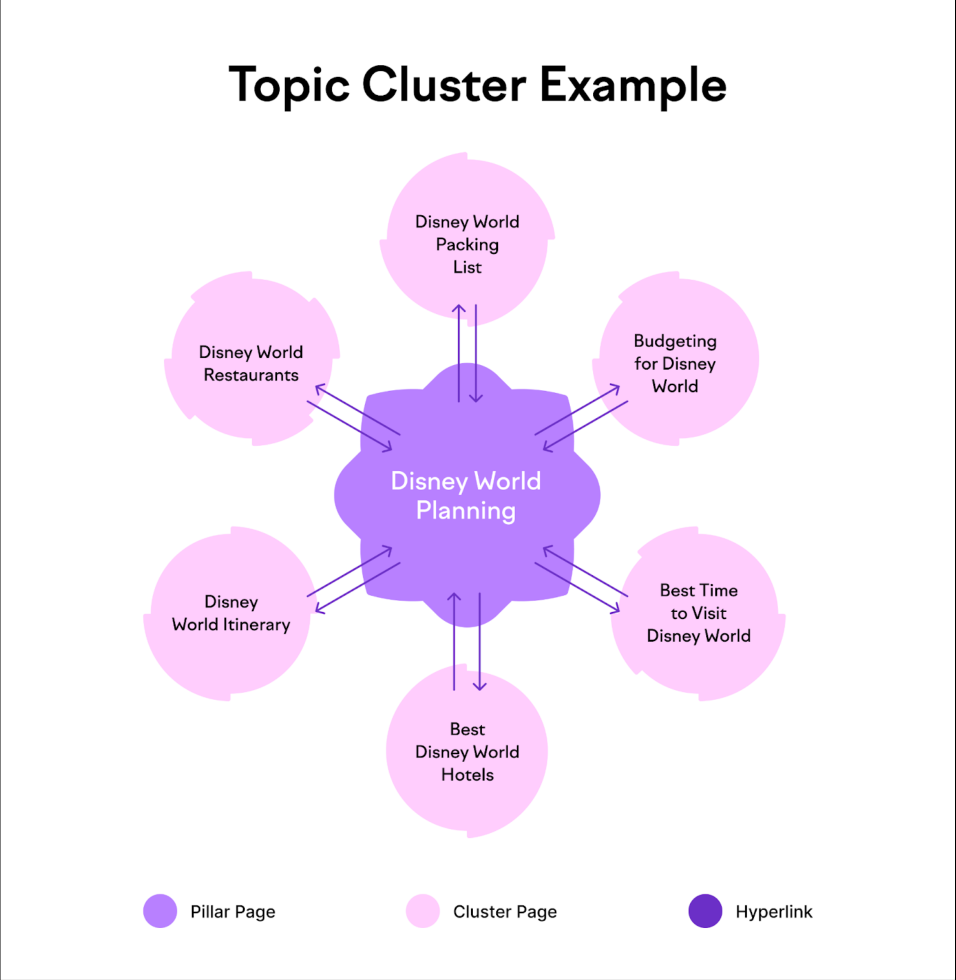
Transitioning requires shifting from page-level keyword targeting to entity-based content architecture through four stages. Audit existing content for keyword dependency. Map your central entity and define attributes using E-A-V structures. Reorganize pages into topic clusters with pillar and supporting content. Rewrite headings as entity declarations with standalone opening sentences.
I walk clients through this exact process. The shift takes 30 to 60 days, and results appear within 60 to 90 days. Read more about transitioning from keyword targeting to entity optimization.
Key Takeaways
Semantic SEO outperforms traditional keyword optimization because it aligns with how Google and AI systems now process content. Google replaced keyword matching with semantic understanding. Semantic content earns AI citations while keyword content gets overlooked. Technical fundamentals still apply, but keyword density is no longer a viable content strategy.
Explore my complete semantic SEO framework or learn how semantic content structures meaning.
More from my semantic SEO cluster:
- How semantic content networks compound visibility
- From keywords to knowledge: the transition
- Entity based copywriting for Google and AI
Frequently Asked Questions
About the Author: Usman Ishaq
Usman Ishaq is a semantic SEO strategist and topical content consultant who builds entity-based content architectures for businesses in recovery services, e-commerce, legal, and SaaS verticals. My methodology follows the Koray Tugberk GUBUR framework and applies a 21 Layer Semantic Content System combining Entity Attribute Value structures with extractive summary optimization and Generative Engine Optimization.
Usman Ishaq works with businesses across the United States to build topical authority through semantic content networks that rank in Google and get cited by AI systems. My approach treats every website as a Web Entity where content, structured data, and brand signals establish measurable authority together.
Work with Usman Ishaq: Upwork
Connect: LinkedIn | YouTube | Facebook | Gravatar
Share: