
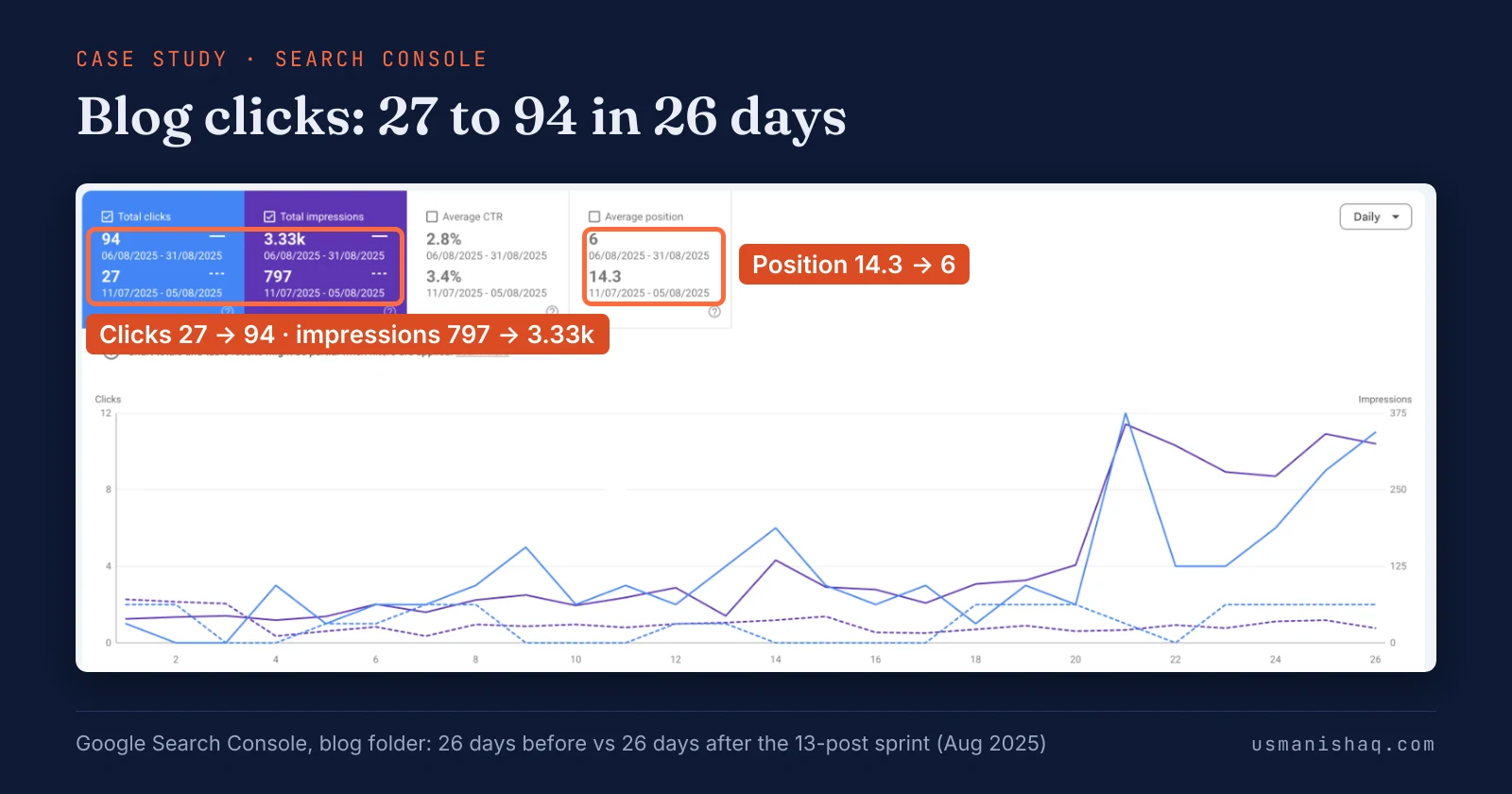
This eSIM SEO case study follows a 13-post content sprint on the blog of a travel eSIM brand for airline crew in August 2025. Blog clicks went from 27 to 94 in the 26 days after the work started, then faded over the next year without new posts.
Results at a glance
The 13-post sprint lifted blog clicks from 27 to 94 in 26 days, and a year later the blog had lost most of that ground.
| Metric | Before | After | Change |
|---|---|---|---|
| Blog clicks, 26 days | 27 | 94 | +248% |
| Blog impressions, 26 days | 797 | about 3,330 | about +318% |
| Blog average position, 26 days | 14.3 | 6 | 8.3 places higher |
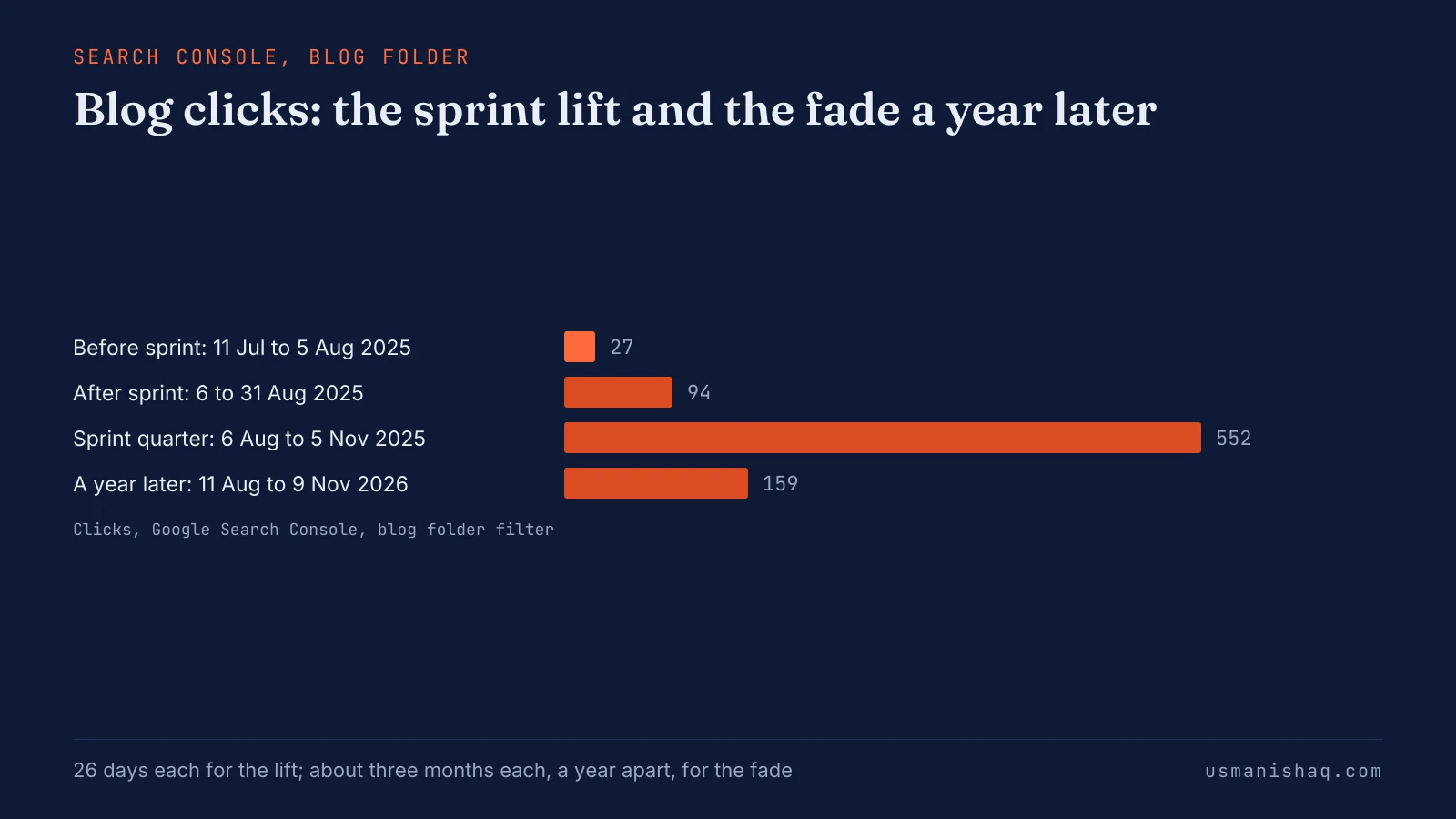
| Blog clicks, about three months, one year apart | 552 | 159 | -71% |
The first three rows compare 11 July to 5 August 2025 with 6 to 31 August 2025 (26 days each), the last row compares 6 August to 5 November 2025 with 11 August to 9 November 2026, and every value comes from Google Search Console filtered to the blog folder.
The bars show the lift and the fade side by side.
The starting point: a travel eSIM blog with almost no posts
The blog took 27 clicks and 797 impressions in the 26 days before the sprint, at an average position of 14.3.
The business sells eSIMs to airline crew, who need roaming data on layovers. Its largest countries by Search Console clicks are India, Germany and the UAE.
The English home page took 10,341 of the site's 15,357 clicks from 10 July 2025 to 9 November 2026, the 16 months Search Console keeps. The top queries of the last 12 months are the brand name and its spellings.
The blog had 2 posts before 6 August 2025. That's thin for travel eSIM blog SEO, with almost no airline crew eSIM content.
What I did, in order
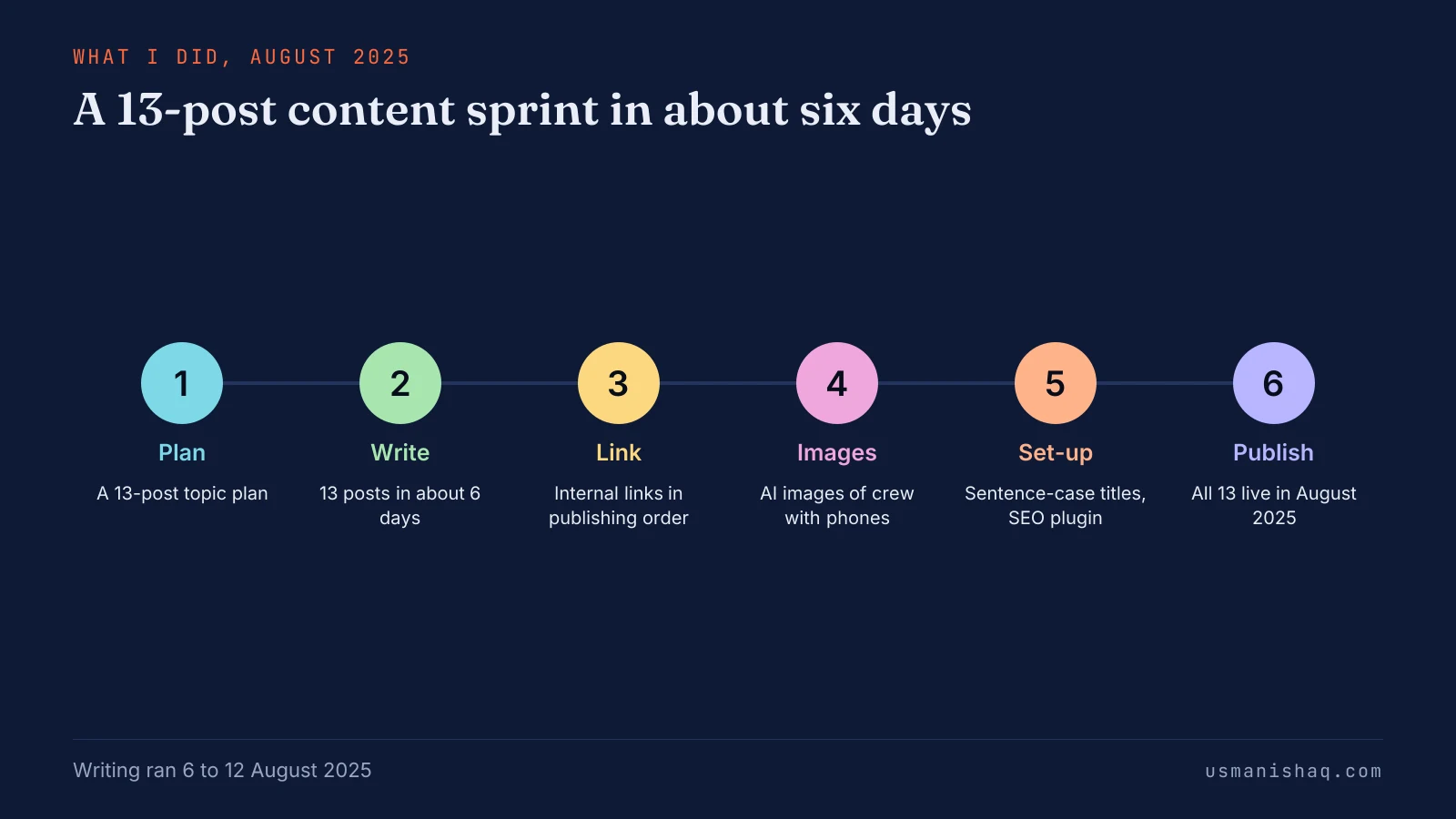
I wrote and loaded 13 blog posts in about six days, from 6 to 12 August 2025.
The work ran in this order:
- August 2025: started from a 13-post content plan. Every topic was fixed before writing began.
- August 2025: wrote 13 posts in about six days. Each post went into the site as a draft.
- August 2025: set the internal links in publishing order. I linked the posts in the order they were due to go out, so the set would work as one connected group.
- August 2025: added images of crew with their phones. The images were AI-generated.
- August 2025: set up titles and an SEO plugin. Titles went in sentence case, and I installed an SEO plugin.
The set went live between 6 and 31 August 2025. The timeline puts the six steps on one line.
What changed
Blog clicks rose from 27 to 94 in the 26 days after the sprint started.
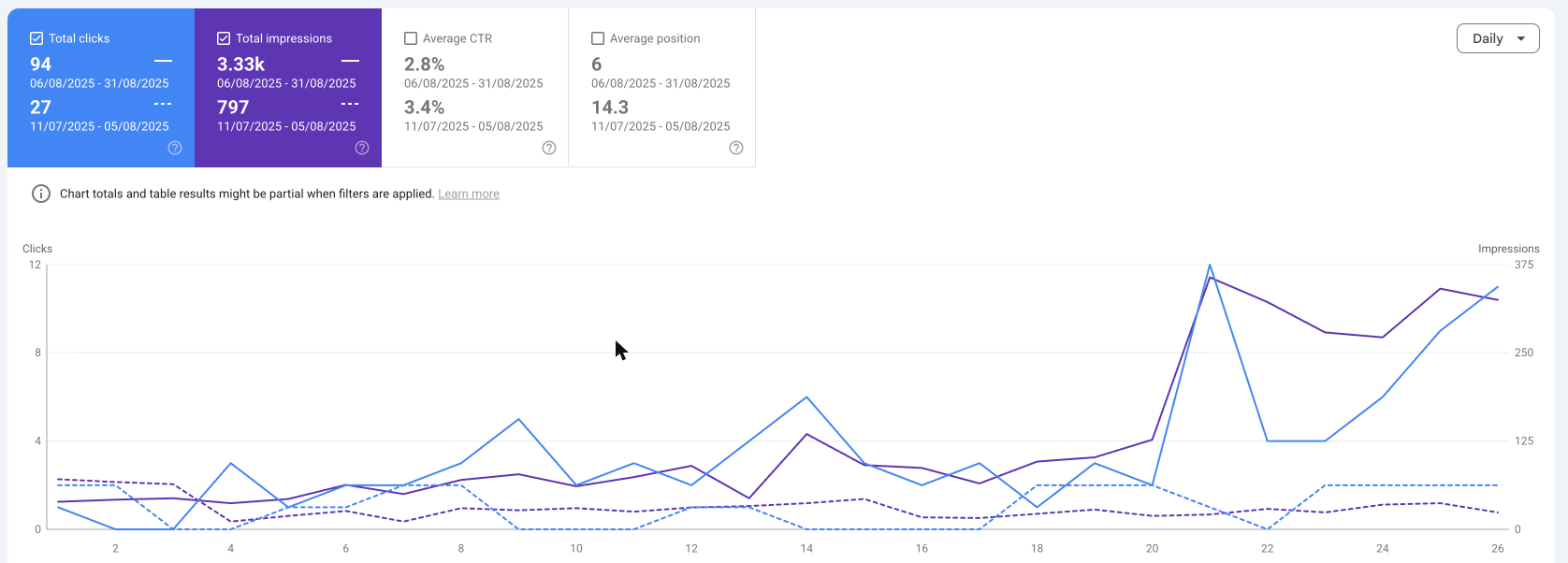
Blog impressions went from 797 to about 3,330 in the same windows. Average position moved from 14.3 to 6.
Only 6 of the 76 queries in the comparison gained clicks. The six account for 31 of the 67 extra clicks. The other 36 sit in queries the report doesn't list.
Branded and brand-like searches took 27 of those 31 clicks. The brand name went from 3 clicks to 21. "[brand] review" went from 0 clicks to 7.
A brand-like spelling that also matches the category gained 2. The category phrase "crew esim", which also partly matches the brand name, gained 2 clicks. "Crew e sim" gained 1.
One query naming a third-party app gained 1. The listed queries point one way: the blog mostly reached people who already knew the brand.
The AI citation figures come from Bing Webmaster Tools AI Performance, which counts citations in Microsoft Copilot and partner answers. The whole site had 471 citations in the six months read on 11 November 2026. Blog posts accounted for about 180 of them.
A post on eSIMs for pilots had 50 citations. A crew-switching story had 38. Two guides to eSIMs for specific airlines' crews had 33 and 15.
The six months of citation data fall about 9 to 15 months after the sprint. The sprint produced 13 of the blog's 15 posts. The data doesn't show which cited posts were among the 13.
The year-apart view tells the other half.
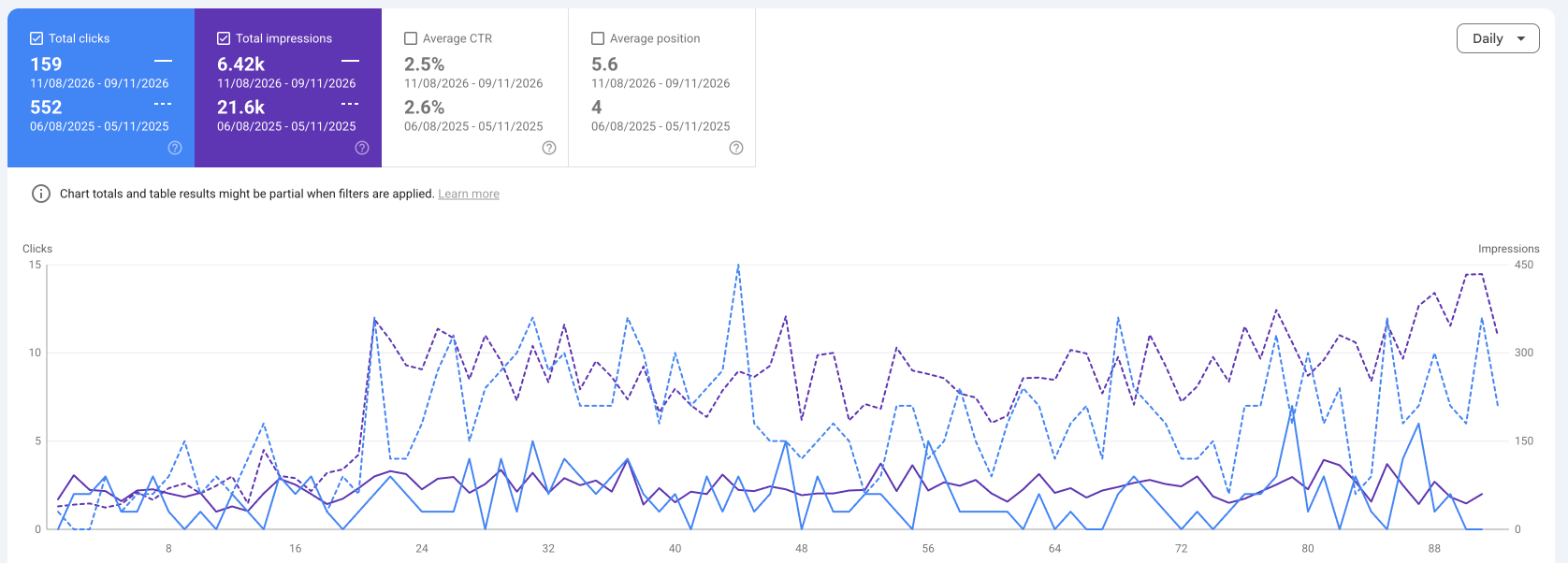
Blog clicks fell from 552 to 159 between those two windows. Blog impressions fell from 21.6k to 6.42k. Average position slipped from 4 to 5.6.
Only one query gained a click, the single word "upgrade". The brand name lost the most, falling from 107 clicks to 24.
"Crew esim" fell from 9 clicks to 0. The blog published nothing new between the two windows.
What did not move, and what happens when you stop blogging
Blog click-through rate did not improve in either comparison.
Blog click-through rate went from 3.4% to 2.8% in the 26-day comparison. A year later the rate went from 2.6% to 2.5%.
The listed category queries barely moved. "Crew esim" and "crew e sim" added 3 clicks between them in the 26-day window.
I won't claim the whole site. The site took 568 clicks in August 2025.
Site clicks then reached 1,316 in September 2025, mostly from pages outside the blog.
The whole site took 2,401 clicks from 10 July to 9 October 2025. The whole site took 3,000 clicks from 10 August to 9 November 2026, up 24.9%.
Site clicks held up better than blog clicks. Search Console shows what happened, not why. The post record shows no new posts after August 2025.
What happens when you stop blogging? This blog is one first-hand answer. A one-off batch got one-off results.
My view: publishing continuity beats content velocity. An SEO content network compounds only while new posts keep joining it.
What this eSIM SEO case study means for your site
A content sprint can lift a blog within weeks, and in this case the lift faded within a year without follow-up posts.
Four points carry over to most small blogs:
- Plan the second batch before the first goes live. Topics and publishing dates belong in one plan, which is what Semantic SEO Architecture covers. It should list the posts after the sprint, and this guide shows how a topical map for a business website is built.
- Split branded queries from generic ones before you judge a blog. Here most of the gain that Search Console ties to a query was branded, while the category phrases gained 3 clicks. That split is the first check in a Semantic Content Audit.
- Compare equal windows, then check again at three and twelve months. The 26-day window showed the lift. Only the year-apart window showed the fade, so Semantic Content Production reports should use both.
- Count AI citations separately from clicks. About 180 Bing AI citations went to blog posts in six months. Blog clicks in the last three of those months sat 71% below a year earlier. Tracking both is part of AI Search Visibility work.
Thirteen posts got the blog moving. Nothing kept it moving.