
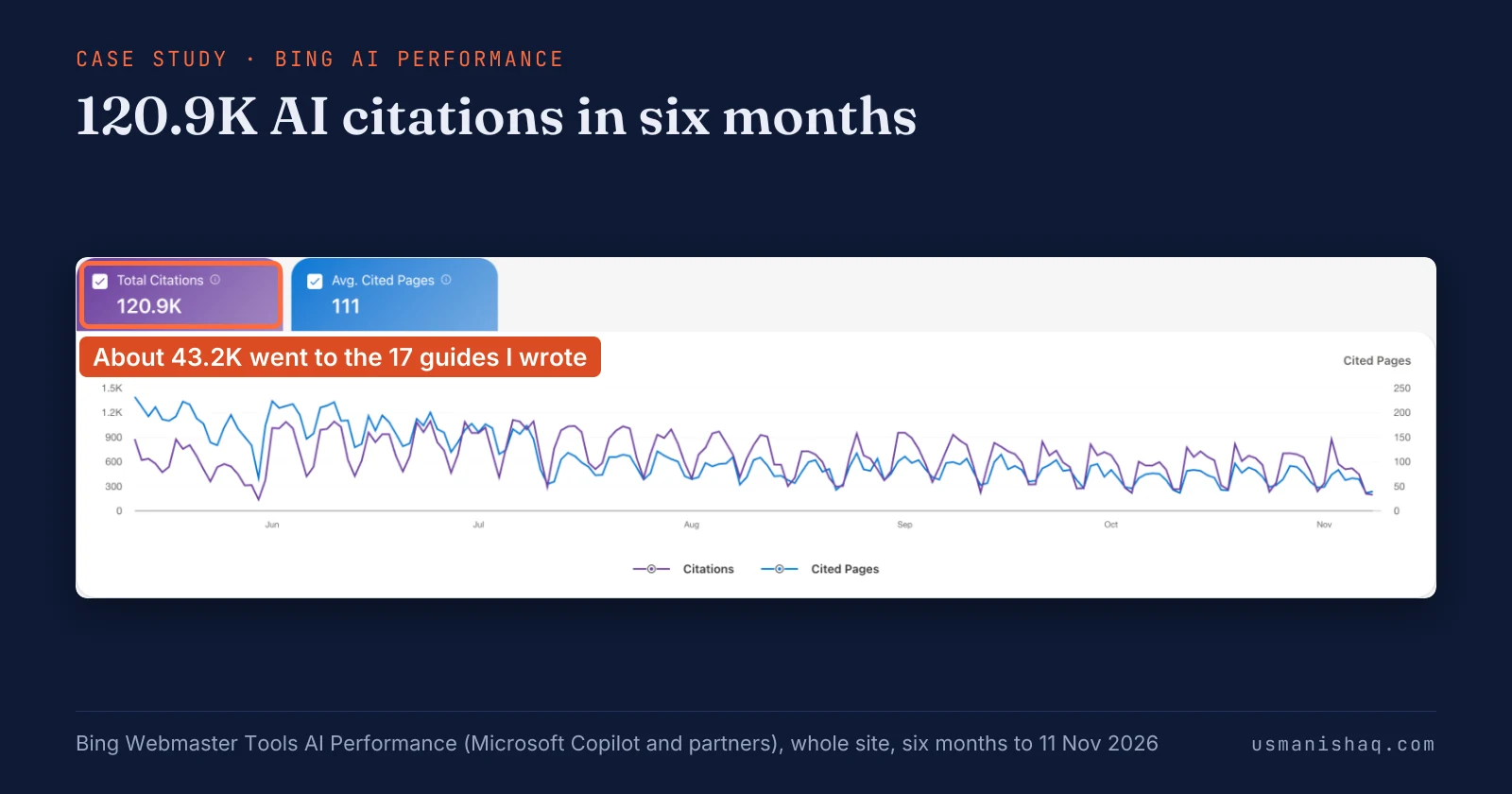
The 14-week blog program in this calling app SEO case study ran on an international calling app's main blog from April to July 2025. A year later, the guides from that program drew about 43.2K AI citations over six months in Bing's AI Performance report.
Results at a glance
The blog now ranks higher and gets cited by AI assistants, while its clicks from Google are about 10% lower.
| Metric | Before | After | Change |
|---|---|---|---|
| Blog clicks from Google | 7.48k | 6.76k | About 10% lower |
| Blog impressions on Google | 1.34m | 1.52m | About 13% higher |
| Blog average position on Google | 13.1 | 7.8 | 5.3 places higher |
| AI citations, 17 pages published April to July 2025 | No reading | About 43.2K | No baseline to compare |
| AI citations, whole site | No reading | 120.9K | No baseline to compare |
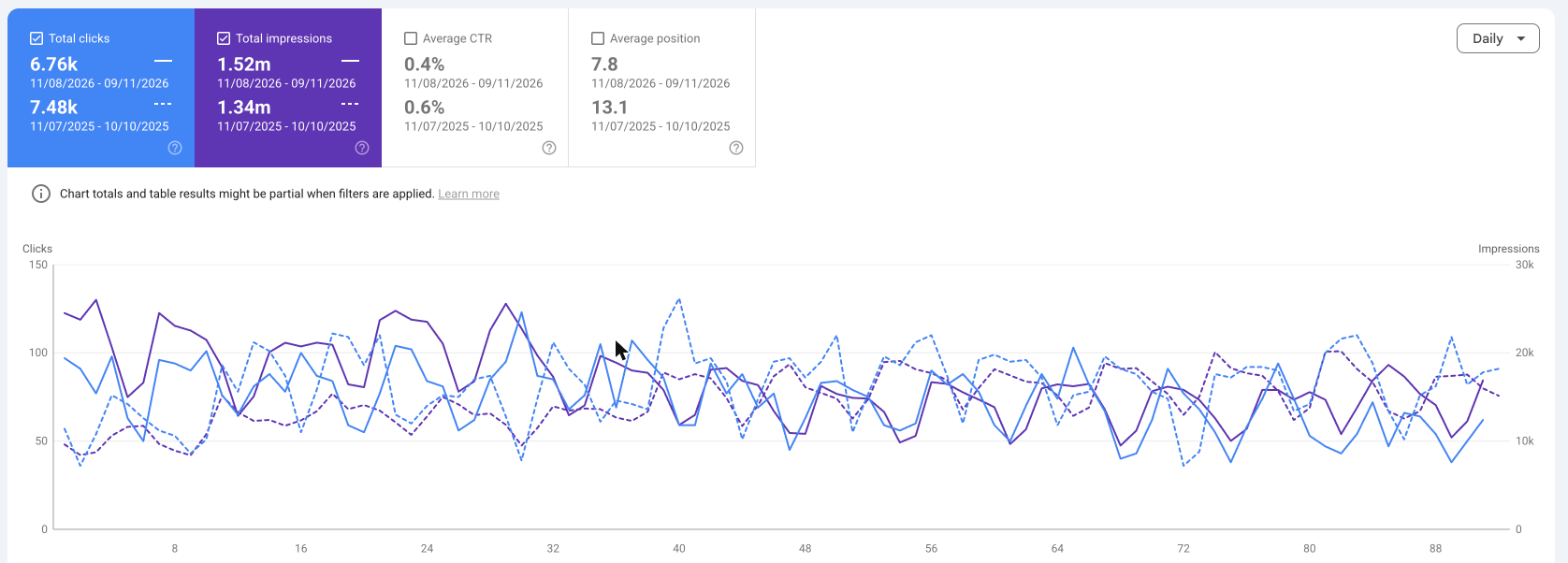
Google Search Console figures compare the blog folder from 11 July to 10 October 2025 with 11 August to 9 November 2026. The Before window starts in the program's final fortnight, so it isn't a reading from before the work. The AI citations come from Bing Webmaster Tools AI Performance for the six months to 11 November 2026.
The starting point: an international calling app blog
The blog was a small set of short, trend-led posts before the program started.
Twelve posts sat on the main blog before 10 April 2025. They were short and tied to whatever was in the news.
People reach a calling app with tasks in mind: calling a bank from abroad, finding a toll-free number, checking a country code. Trend posts don't answer those, and they age fast.
Search Console keeps a 16-month window, so the months of the work itself, April to July 2025, can no longer be read. The earliest day it still holds is 10 July 2025, in the program's final fortnight.
What I did, in order: a 14-week blog program
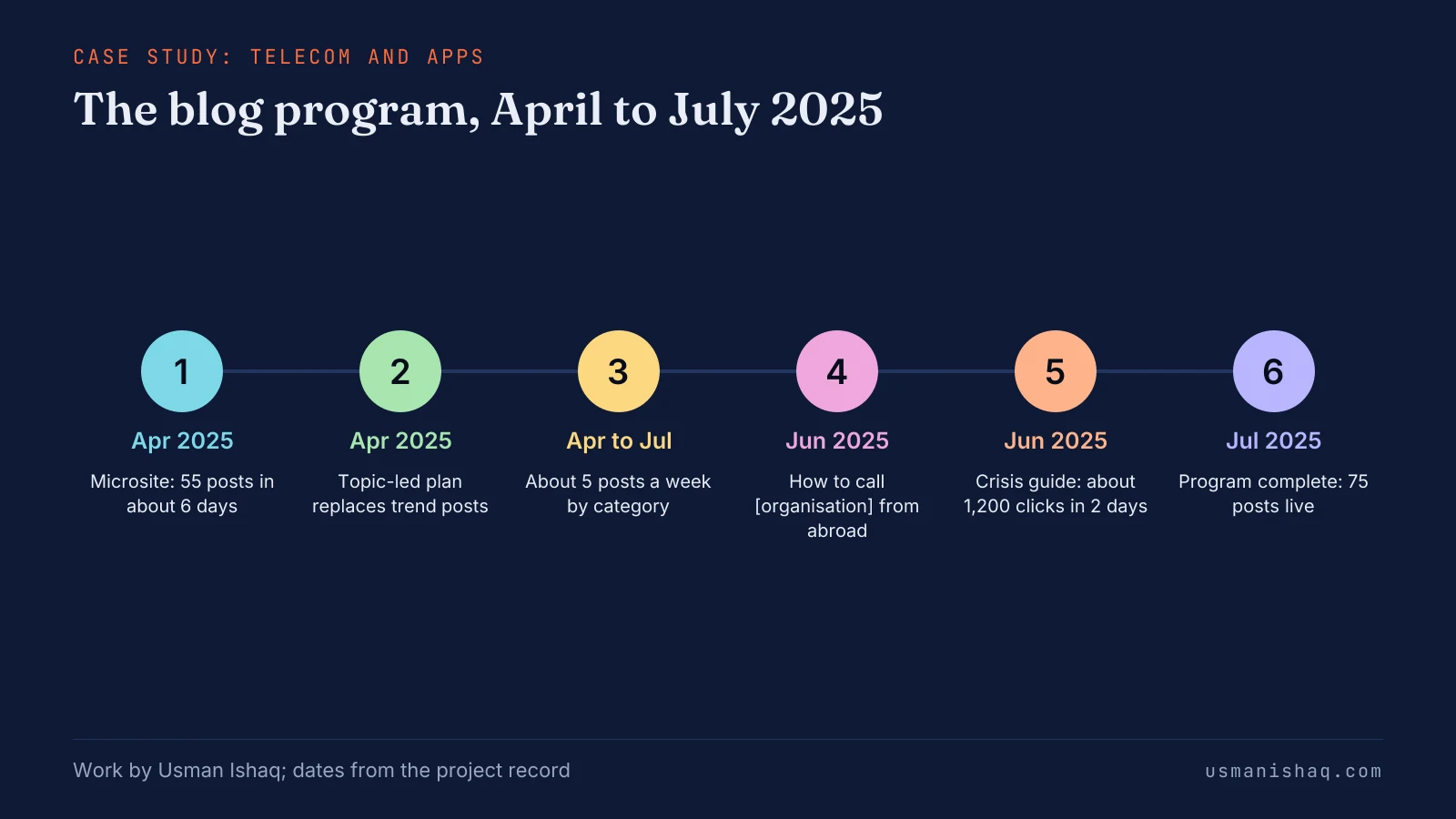
The work ran in six dated steps between April and July 2025:
- April 2025: a separate microsite of 55 posts in about six days. A news event needed fast coverage before the main blog program began.
- April 2025: a topic-led plan for the main blog. The plan replaced short, trend-only posts with topics built around the tasks the app's users search for. The blog became one semantic content network rather than a feed of one-off posts.
- April to July 2025: about five posts a week, by category. The categories were apps, alternatives, cheap calls abroad, how-to guides and service numbers. The blog published 75 posts between 10 April and 20 July 2025.
- June 2025: "how to call [organisation] from abroad" guides. Each guide answers one task, such as reaching a bank, an airline, a utility or a government agency helpline from another country. The order came from the app's own list of the 100 numbers its users call most.
- June 2025: a crisis-calling guide for a country cut off from the internet. Published on 17 June, it drew about 1,200 clicks within two days.
- July 2025: program complete. The last guides went live in mid-July, among them a guide to a UK TV provider's support line.
What changed: AI citations to blog guides and Google rankings
The guides published in 2025 keep earning AI citations, and the blog ranks higher on Google than it did a year ago.
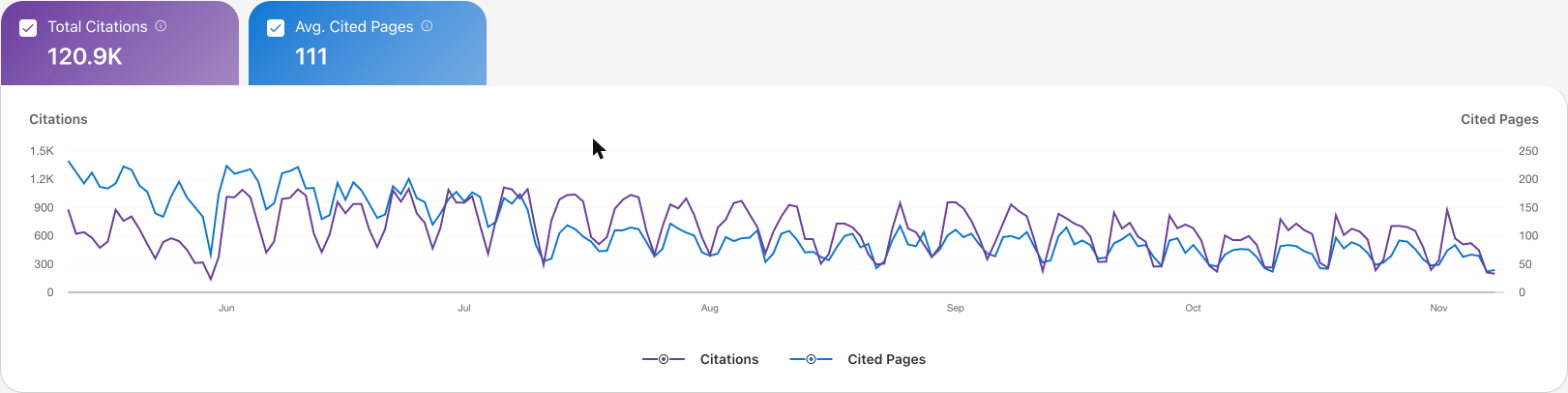
Telecom app content marketing case study pages usually report traffic alone. The Bing data adds a second measure: AI citations to blog guides.
Bing Webmaster Tools shows AI citations in its AI Performance report, which counts how often Microsoft Copilot and its partners cite a page in an answer. The whole site drew 120.9K citations in the six months to 11 November 2026. The report shows an average of 111 cited pages a day.
No posts were published after 20 July 2025. Even so, seventeen of the 25 most cited pages on the site come from the 2025 program.
Together, those 17 pages hold about 43.2K citations. My own calculation puts them at roughly 36% of the site's total.
Service-number guides lead that group. A page on contacting Australia's welfare agency from abroad has 9.7K citations. A page on reaching a UAE telecom operator has 9.6K.
The UK TV provider guide has 5.9K. The service-number format already existed among the twelve earlier posts, and the 2025 program scaled it up.
Three highly cited pages from 2024 sit outside that count, on a tax office, an Australian bank and a US bank. The tax-office page alone has 12.3K citations. I left all three out of the 43.2K.
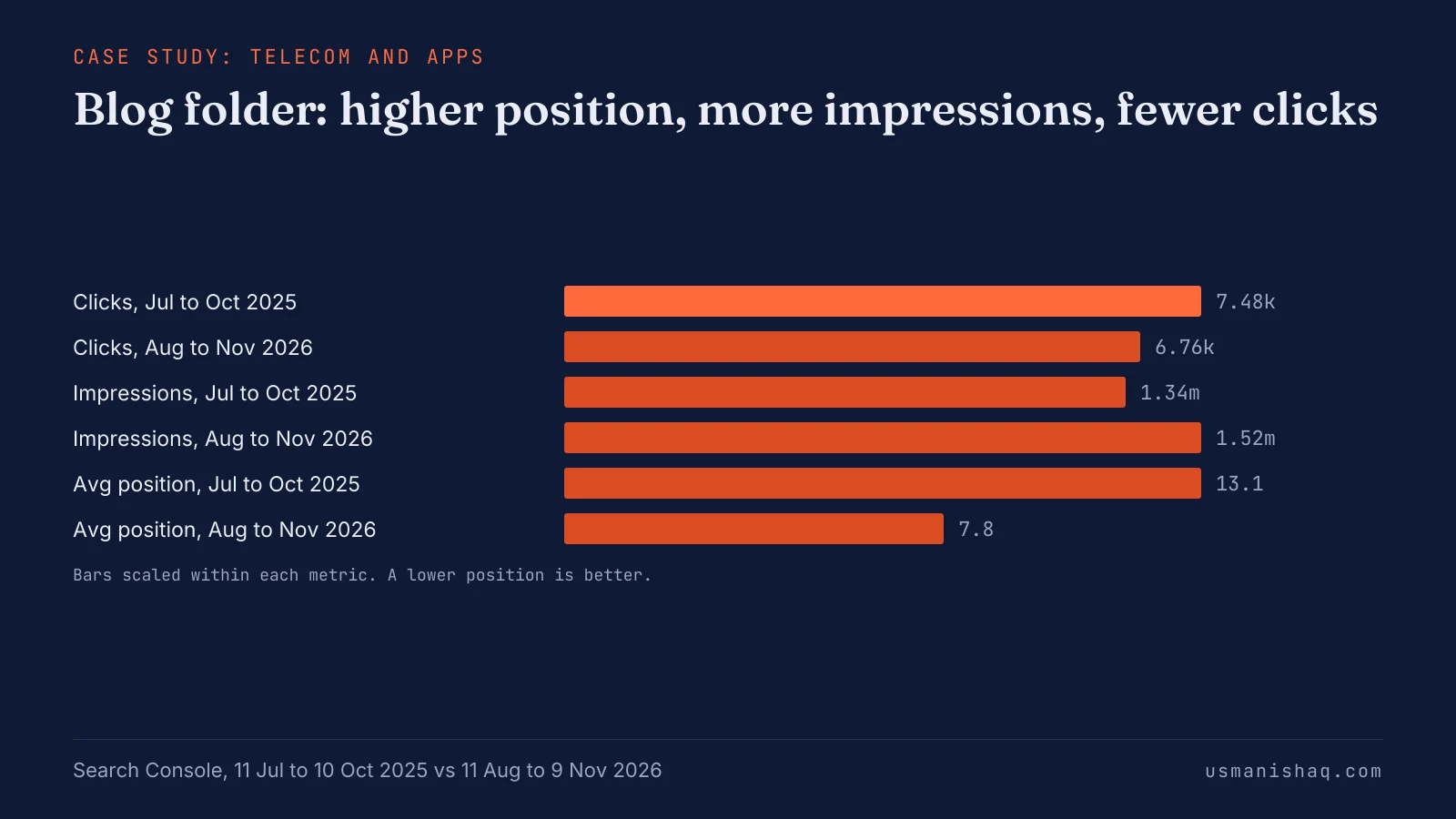
Google tells a quieter story. The blog folder's average position moved from 13.1 to 7.8 between the two windows. Impressions rose from 1.34m to 1.52m.
Clicks went the other way, from 7.48k to 6.76k. Click-through rate fell from 0.6% to 0.4%, so the blog is seen more and clicked less.
The blog folder holds 44.2k clicks across the Search Console 16-month window. A guide to calling a major US bank from abroad, published during the 2025 program, has 5,359 of them.
Half of the ten queries that gained most between the two windows are service-number questions, with small gains. Searches for contacting Australia's welfare agency from overseas went from 1 click to 12. A bank's Spanish-language customer service from abroad went from 0 clicks to 8.
What did not move
Blog clicks from Google did not grow, and clicks across the whole site fell over the same period.
Blog clicks fell about 10% between the two windows, even with better positions. My reading is that answer boxes and AI Overviews now settle service-number searches on the results page. That's an opinion, not something the data proves.
Site-wide clicks fell from about 139k to about 111k, comparing 10 July to 9 October 2025 with 10 August to 9 November 2026. The site's biggest click sources are brand searches and the app's login page, which the blog doesn't touch.
The whole site's average position moved from 10.9 to 7.4 over those windows, so I don't credit the blog's gain in position to the guides alone.
Bing's figures cover only the six months to 11 November 2026, so the citations have no starting figure. The crisis-calling guide's two-day spike also came from a news event, not from the plan.
I noted guides ranking on pages two and three of Google in July 2025, and some appearing in AI Overviews. Long-tail content program results were slow to show in clicks then, and they still are.
What this calling app SEO case study means for your site
A content program should be judged on rankings, impressions and AI citations as well as clicks.
Four points carry over to most service businesses:
- Build the page plan from your own support questions. Service-number guides ranked from the app's list of most-called numbers lead the 2025 pages in AI citations, and your call logs and inbox hold the same kind of list. Turning those questions into planned, written pages is what Semantic Content Production covers.
- Give each customer task its own page. One guide per organisation and task, such as calling a bank from abroad, made each customer service number page easy to quote. Deciding which query earns its own page is the job Semantic SEO Architecture does at the planning stage.
- Track AI citations from the first month. Bing Webmaster Tools reports them free, and a baseline makes the later numbers comparable, which is where AI Search Visibility work starts.
- Agree the yardstick and the time frame before you publish. Clicks from the guides were slow at fourteen weeks, and the same guides were still being cited a year later. A Semantic Content Audit at the start should fix what success means at three months and at twelve.